I am a pure math student at UC Berkeley. My primary background is in topology, differential geometry, and algebra. I'm now also becoming proficient in numerical mathematics and ML. I'm interested in geometric/topological solutions in statistical learning.
GPA 4.00 Albany, CA LinkedIn
Tianruo You

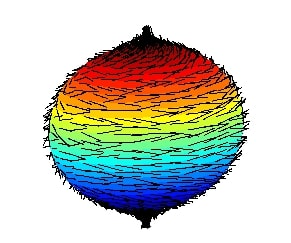
"Hairy Ball Theorem"
Topology says: every hairy sphere must go bald somewhere — including me, eventually.

Education

University of California, Berkeley

Albany, CAAug. 2025 — Jun. 2026 (expected)
B.A. in Mathematics — GPA: 4.00

Vanderbilt University

Nashville, TNAug. 2024 — May. 2025
B.A. in Mathematics — GPA: 4.00

University of California, Santa Barbara

Santa Barbara, CASep. 2023 — Jun. 2024
B.A. in Applied Mathematics — GPA: 3.97

Relevant Coursework

Advanced Matrix Computations, Abstract Linear Algebra, Abstract Algebra, Real Analysis, Differential Geometry, Topology, Linear Algebra, Advanced Probability and Statistics

Awards & Honors

Three FRAP Grants, UC Santa Barbara

Santa Barbara, CA2023, 2024, 2024
Each grant valued at $750

UCSB Library Research Showcase Poster

Santa Barbara, CA2024
"Trait Digitalization of Anthophila" (NSF Project #DBI2102006), accepted and presented (link)

California Nature Art Museum Exhibition

Solvang, CA2024
High-resolution image of Agapostemon texanus from NSF Big-Bee project selected for public exhibition

Projects

Efficient Computation of Jacobian Determinants in Normalizing Flows

With Jonathan Opitz and Boldizsar (Bodi) Szabo. Under Ming GuBerkeley, CAAug. 2025 — Present
  • Identified the computational bottleneck of Normalizing Flows (NFs) in the calculation of the Jacobian determinant within the flow's transformation, especially in cases of higher-dimensional domains, such as image generation (D ~ 105).
  • Proposed possible more efficient strategies including Triangular Jacobians, Sylvester low-rank updates, and Hutchinson trace estimators, implementing metrics like runtime per epoch, memory usage, gradient Norms/variance, condition Number and Fréchet inception distance.
  • Reduced the Jacobian determinant computational cost from O(D3) to O(D) or O(m3) for m ≪ D, enabling scalable likelihood-based training on high-dimensional data.

Poincaré–Hopf Theorem and its Application in Topology

Under Galen LiangBerkeley, CAAug. 2025 — Present
  • By sketching observed examples and categorizing points into circular, sink/source, saddle, and dipole points, generalized cases into a formative proof of Poincaré–Hopf, specifically in 2-dimensional spaces.
  • Through interpreting Poincaré–Hopf, bridged analytic phenomena to dynamics (zero points) with topology and Euler characteristic, one of the most well-known topological invariants.
  • Using the corollary of Hairy Ball Theorem, topologically explained why people cannot successfully comb their hair to avoid the "balding point."

Advancing Crypto-Market Sentiment Modeling

Under Robert Anderson, Stephen BianchiBerkeley, CAApr. 2025 — Present
  • Adopted transformer-based financial sentiment analysis technology to develop a sentiment-augmented GARCH model and processed influential commentaries from social media.
  • Incorporated real-time sentiment data (such as geopolitical shifts and policy reversals) into volatility model, applying Chow, CUSUM, and ICSS to test parameter stability.
  • Validated output precision through correlation analyses and statistical tests against the model-identified event timeline and the actual human annotations.

Research Experiences

Manifold-based Representation Learning for Dynamical Systems (GD-VAE)

Under Paul AtzbergerSanta Barbara, CANov. 2023 — Jun. 2024
  • Analyzed how traditional VAE/AEs misrepresent topologically non-Euclidean dynamics, causing twist or abrupt jumps in latent spaces; standard approach also potentially maps away from characterized locations during training.
  • Explored GD-VAE's approach in tailoring manifold latent spaces to solve the topological incompatibility; assessed the improvement in multi-step prediction robustness and stability by confining dynamics within the manifold.
  • Through applying appropriate manifolds, analyzed GD-VAE's more structured and disentangled embedding of temporal and state variables, revealing the underlying mechanisms behind observed behaviors.

NSF Big-Bee Project: Trait Digitalization of Anthophila

Under Katja SeltmannSanta Barbara, CA | Berkeley, CAAug. 2023 — Present
  • Using ImageJ and Zerene Stacker, created ultra-resolution lateral shots for 1,000+ bee specimens, contributing to Big Bee Library, with one image exhibited at the California Nature Art Museum.
  • With Agisoft Metashape, reconstructed 10+ 3D models of Xylocopa latipes (carpenter bees) and implemented a volumetric measurement workflow to study insular dwarfism in this species.
  • Using OpenCV, NumPy, and scikit-learn, clustered visual hotspots in bee images, quantifying the camouflage effectiveness from abdominal coloration (metallic green / yellow-black stripes).

Quantitative Semantic Interpretation in Music Cognition

Under Janet BourneSanta Barbara, CADec. 2023 — May. 2024
  • Through playing the same progressions (e.g., the Darth Vader theme) on different instruments (bagpipes, organs, etc.), coded Qualtrics forms, and collected written responses reflecting participants' impressions.
  • Applied the Meaning Extraction Method (MEM) to identify frequently used expressions in responses and generate lexical profiles for grouped responses.
  • Using SPSS and Amos, performed Exploratory Factor Analysis (EFA) and Confirmatory Factor Analysis (CFA) on MEM data, contributing to the understanding of latent semantic dimensions.

Professional Experiences

Syriac Text Digitalization and Database Development

Data Science Assistant under David A. MichelsonNashville, TNAug. 2024 — May. 2025
  • Repaired discrepancies in the Syriaca.org database by tracing entries back to original Syriac sources and applying targeted HTML edits, improving data accuracy for manuscript digitalization.
  • Enhanced the Syriac Reference Portal by refining cross-referencing and search systems, increasing stability and reliability for scholarly use.

Boston Scientific

Channel Operations AssistantRemoteApr. 2024 — Oct. 2024
  • Built a distributor value assessment framework and conducted full-scale analysis of 2,000+ tier-2 distributors (user activity, terminal coverage, order conversion), generating 20+ visualization reports that informed core distributor segmentation strategies.
  • Led the annual distributor satisfaction survey, designing Likert-scale questionnaires and analyzing 500+ responses to identify three major pain points—order tracking delays, insufficient training resources, and slow system response—driving improvements in partner experience.

Perception and Attribution in Police–Civilian Interactions

Behavioral Data Analyst under Diego Padilla, Kyle RatnerSanta Barbara, CADec. 2023 — Jun. 2024
  • Developed and tested attribution models in Social Perception sciences to analyze perceivers' judgments of cross-race interactions, especially policing, focusing on how the perceivers infer racism from aggressive police behaviors toward minority civilians.
  • Explored Causal Inference Frameworks (e.g., Kelley's Covariation Model, Gilbert's Three-Stage Model of Attribution) and tested using 2x2 MANOVA, hierarchical regression, and structural equation modeling (SEM) to quantify dispositional and situational inference effects.

Selected Writings

Contact

Profiles